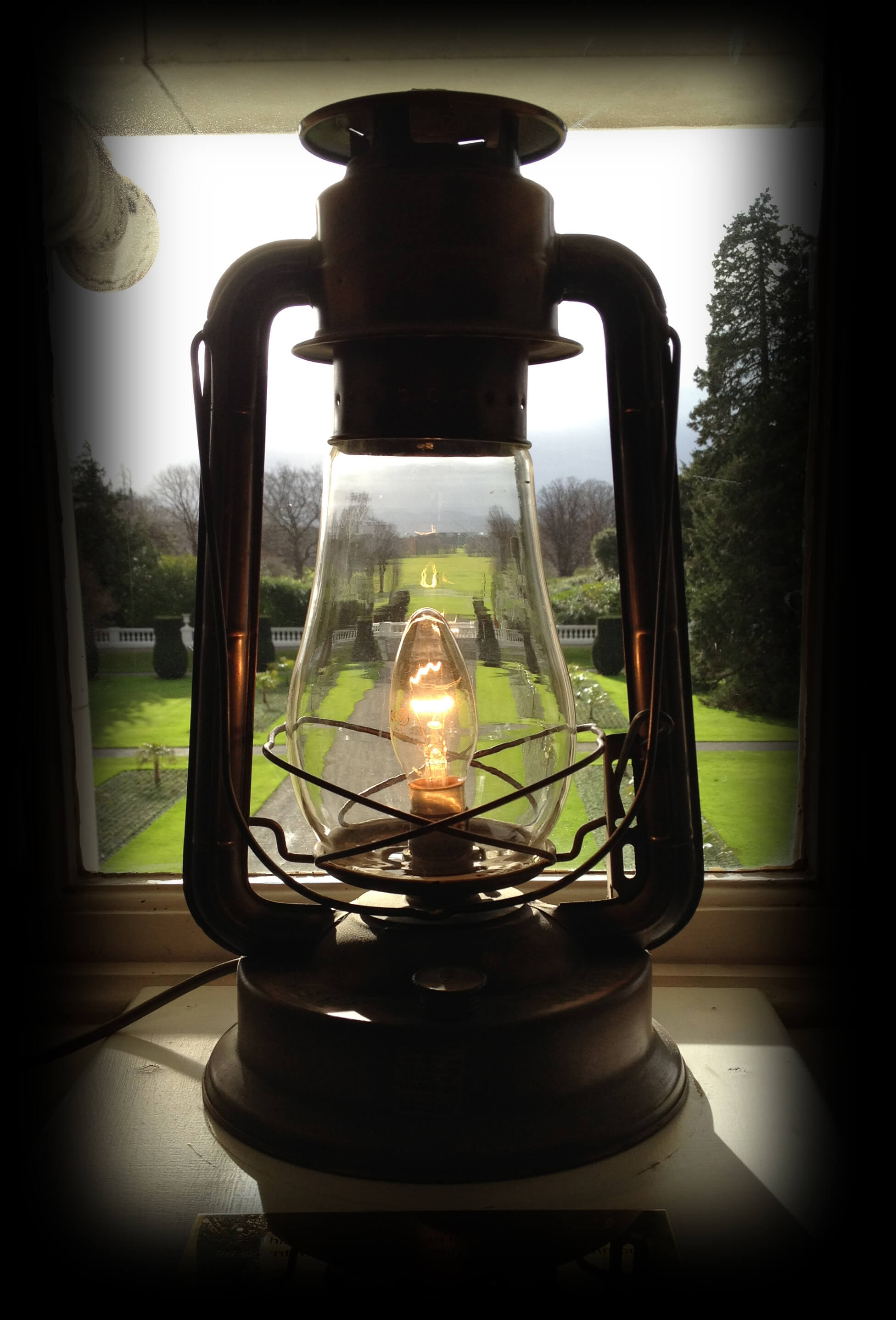
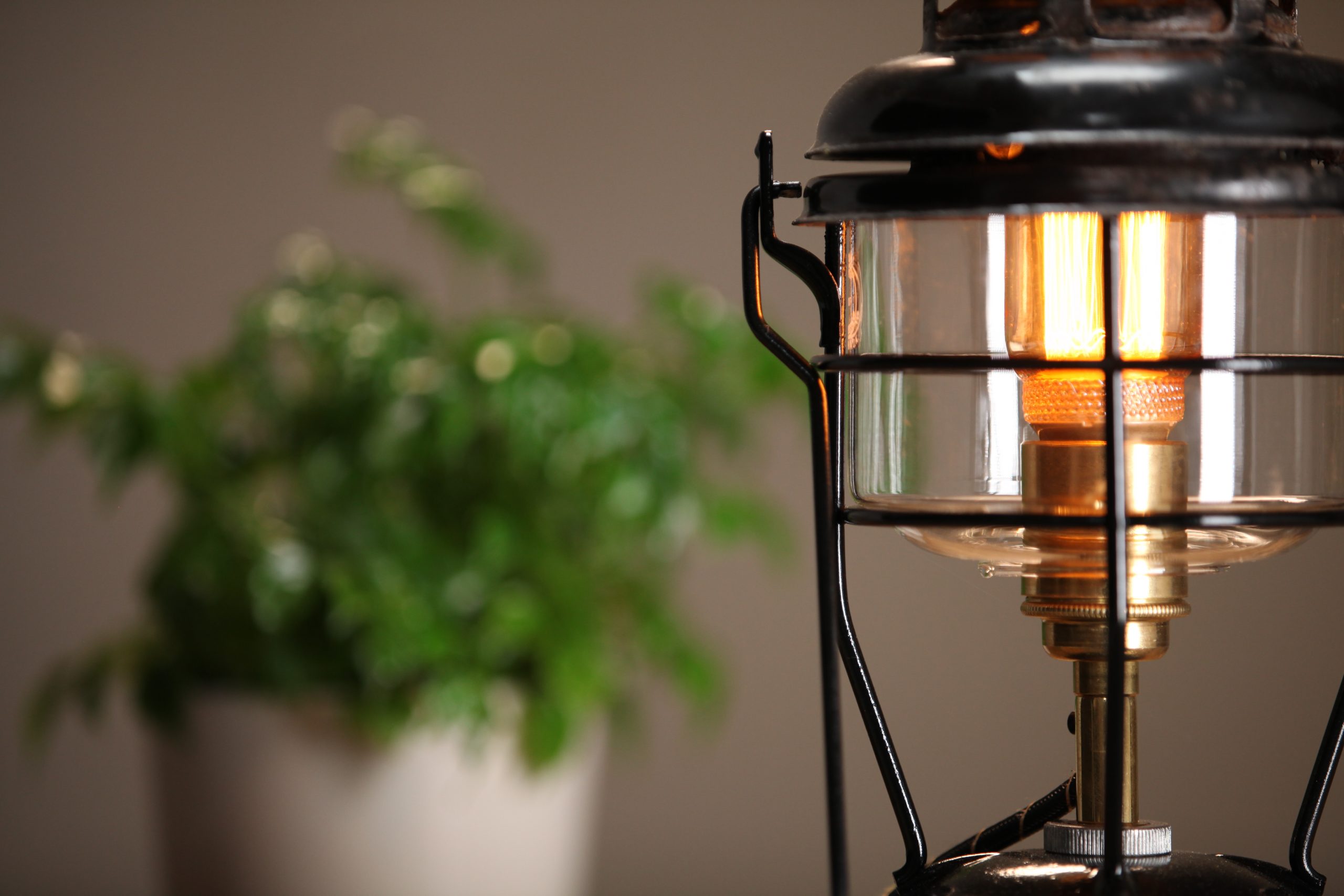
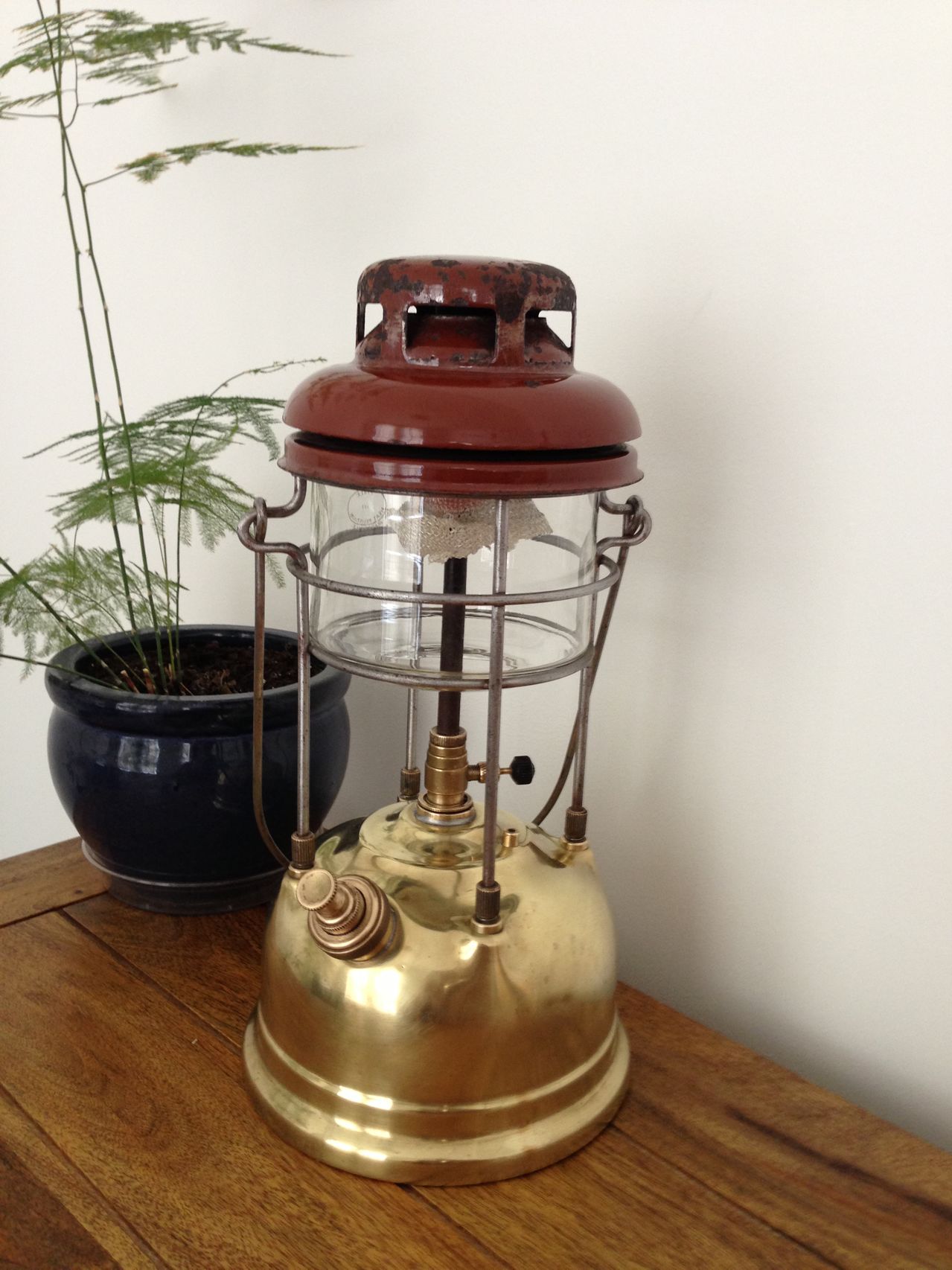
The Tilley lamp is a kerosene pressure lamp.
History
In 1813, John Tilley invented the hydro-pneumatic blowpipe. In 1818, William Henry Tilley, gas fitters, was manufacturing gas lamps in Stoke Newington, and, in the 1830s, in Shoreditch.
In 1846, Abraham Pineo Gesner invented coal oil, a substitute for whale oil for lighting, distilled from coal. Kerosene, made from petroleum, later became a popular lighting fuel. In 1853, most versions of the kerosene lamp were invented by Polish inventor and pharmacist Ignacy Łukasiewicz, in Lviv. It was a significant improvement over lamps designed to burn vegetable or sperm oil.
On 23 September 1885, Carl Auer von Welsbach received a patent on the gas flame heated incandescent mantle light.
In 1914, the Coleman Lantern, a similar pressure lamp was introduced by the US Coleman Company.
In 1915, during World War I, the Tilley company moved to Brent Street in Hendon, and began developing a kerosene pressure lamp.
In 1919, Tilley High-Pressure Gas Company started using kerosene as a fuel for lamps.
In the 1920s, Tilley company got a contract to supply lamps to railways, and made domestic lamps.
During World War II, Armed Forces purchased quantities of lamps, thus many sailors, soldiers and airmen used a Tilley Lamp.
After World War II, demand for Tilley Lamps drove expansion to a second factory, in Cricklewood, then a third, merged, single factory in Colindale.
The company moved to Northern Ireland in the early 1960s, finally settling in Belfast. It moved back to England in 2000.
Competing lamps
See also
- Davy lamp
- Naphtha flare
Further reading
- Jim Dick, A History of Tilley Lamps ISBN 0-646-39330-8
References
External links
- Principles of Tilley lamp operation
- Tilley lamp resource fansite